
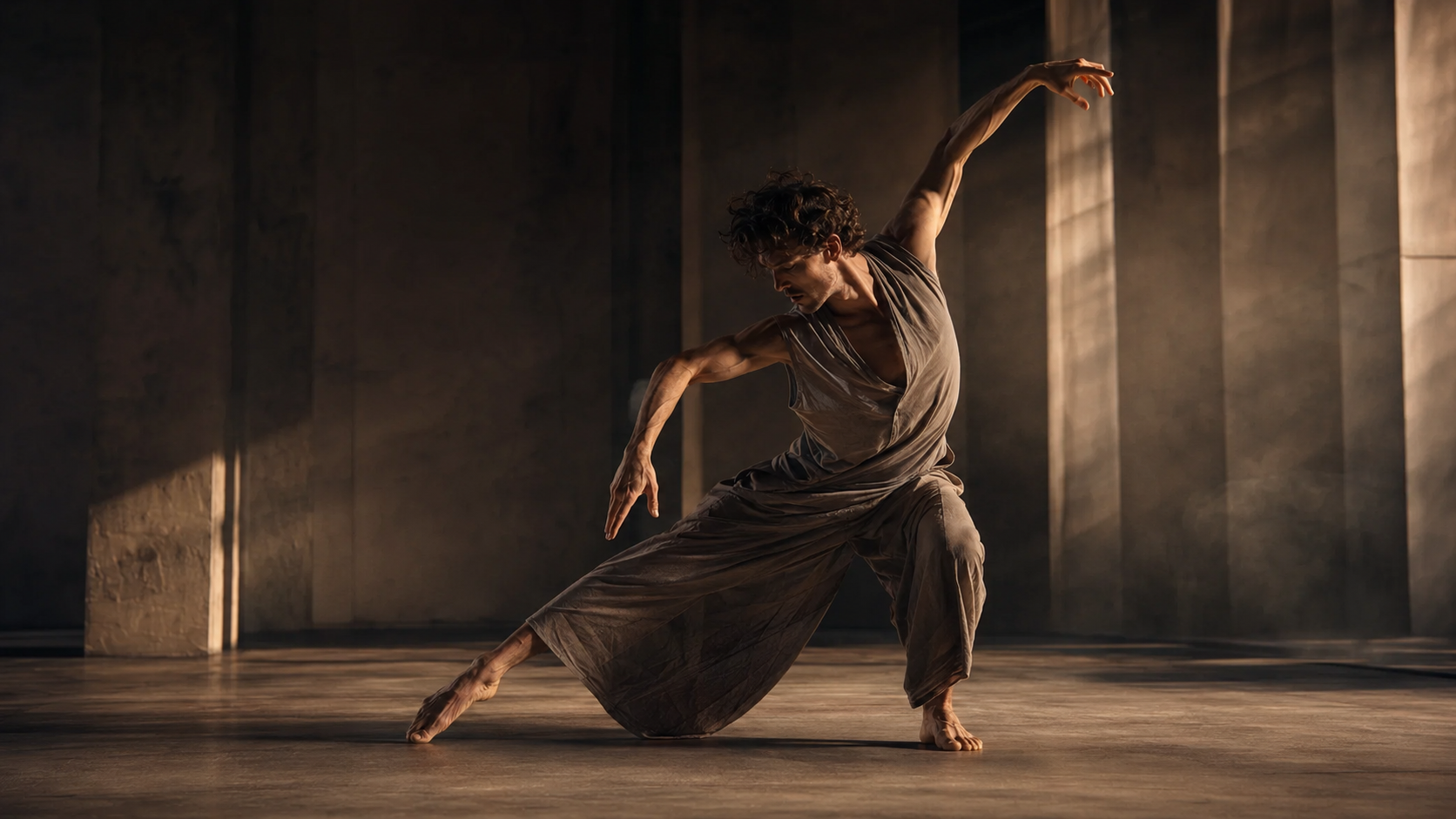
Contemporary ballet lives between tradition and experimentation. It draws on the precision and discipline of classical ballet while opening the door to new movement, music, and ideas.
A New Language of Movement
Contemporary ballet expands the vocabulary of classical technique. Choreographers combine pointe work and precise lines with grounded movement, unexpected gestures, and greater freedom through the torso. The result is a form that feels both familiar and constantly evolving.
Music, Space, and Collaboration
Contemporary choreographers often work closely with composers, visual artists, and designers. Electronic scores, spoken word, silence, projected images, and unconventional performance spaces can all become part of the choreography. These collaborations allow ballet to respond to the culture and questions of its time.
Why Contemporary Ballet Matters
Contemporary ballet keeps the art form in conversation with the present. It invites new audiences, gives dancers a wider expressive range, and creates space for different bodies, voices, and perspectives. By honoring ballet’s foundations while questioning its boundaries, contemporary artists help ensure that ballet remains alive, relevant, and open to change.
Ballet survives not by standing still, but by continuing to move.